Pickleball Injuries are on the Rise: What to Know Before You Play

Lindsay Knake
| 3 min read
Key Takeaways
- Pickleball injuries are on the rise, with a 90-fold increase in pickleball-related fractures from 2002 to 2022, particularly among those age 60 to 69.
- Common pickleball injuries include shoulder and elbow overuse injuries, sprains and strains, meniscus tears, worsened arthritis, tendinitis and fractures from overuse or falls.
- To play pickleball safely, talk to your primary care provider before starting, learn proper technique, start gradually, listen to your body and stop playing if you feel pain or discomfort.
As pickleball becomes increasingly popular, the number of injuries related to the sport are on the rise.
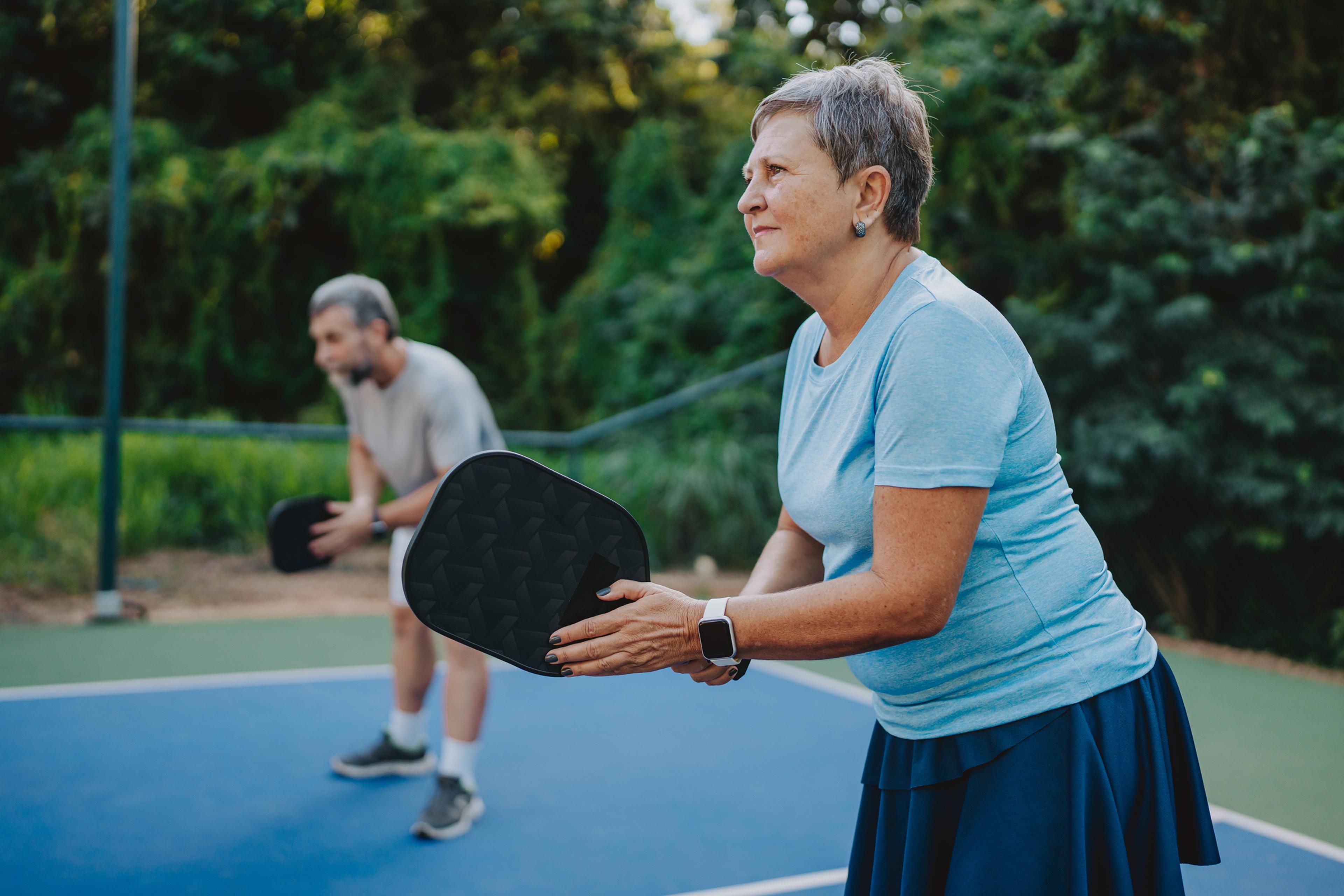
Pickleball is a sport similar to tennis but played on a smaller court with smaller, lighter paddles and a ball like a whiffleball. It’s a fun, fast-paced sport that is generally easy to learn and not too hard on the body. This sport can benefit your heart health, including lowering your blood pressure and cholesterol, in addition to improving your balance and reflexes.
Pickleball is especially popular with Americans age 55 and older, who are more prone to physical injury. Here is a look at common injuries and some ways to enjoy the sport while staying healthy.
How pickleball can lead to injuries
Pickleball involves quick, lateral movements, quick changes in direction and repetitive arm movements, which can lead to overuse injuries and falls. Being competitive and having fun can also lead to people not knowing how hard they are pushing themselves. This is especially the case for people who don’t have a strong fitness base before they start playing.
The American Academy of American Academy of Orthopaedic Surgeons found a 90-fold increase in pickleball-related fractures from 2002 to 2022, particularly among those age 60 to 69. Part of this is not because pickleball is a dangerous sport, but because more people are playing.
Some common pickleball injuries, according to the University of California-Davis, are:
- Shoulder and elbow overuse injuries such as tendinitis
- Ankle and wrist sprains
- Calf strains or tears
- Ligament strains
- Meniscus tears
- Worsened arthritis
- Rotator cuff tendinitis or tears
- Fractures from overuse or falls
If you have discomfort, pain or soreness that lasts for more than a few days, talk to your primary care provider (PCP). Your PCP may refer you to a physical therapist depending on the severity of the injury. For severe pain, shortness of breath or heart symptoms, seek immediate medical attention.
For minor sports injuries, give yourself time to rest until the pain or soreness is gone. You can take over-the-counter pain relief such as ibuprofen or acetaminophen to manage pain.
Safe ways to play pickleball
Here are some ways to approach playing pickleball and staying healthy:
- Talk to your PCP before you start playing, especially if you are new to the sport or have had limited physical activity.
- Learn the basics of the sport and proper technique to reduce strain on your body.
- Wear well-fitted and non-slip shoes to provide stability.
- Start gradually and slowly increase the time and intensity of your matches.
- Warm up with 15 or 20 minutes of walking or jogging and dynamic stretches to prepare your muscles and joints.
- Take regular breaks between matches and throughout the week.
- Listen to your body and stop playing if you feel pain and discomfort.
- Talk to your PCP or physical therapist about a wrist, elbow, knee or ankle brace to provide support for your joints.
- Do other physical activity to improve your overall fitness, such as walking, jogging and strength exercises for your core, shoulders and legs.
Photo credit: Getty Images
Related: