High Fiber Fruits to Keep in Rotation

Lindsay Knake
| 3 min read
Key Takeaways
- About 90% of Americans get only half the recommended 25 to 38 grams of fiber a day; adding high‑fiber fruits can help close the gap.
- Passion fruit tops the list with roughly 12 grams of fiber per half‑cup, followed by raspberries (8 g), blackberries (7.6 g), avocado (6.75 g) and pears (5.5 g) per typical serving.
- Boost fiber intake by tossing fresh or frozen fruit into oatmeal, smoothies, salads or whole‑grain toast, and limit canned fruit, juice and dried fruit that may contain added sugars.
Looking for fruits high in fiber? Passion fruit, raspberries, blackberries, avocado, pears and apples are among the best choices if you want to get enough fiber, which is an essential part of a healthy diet.
Adequate fiber intake can help reduce the risk of chronic conditions, which the majority of Americans will deal with in their lives. About 90% of Americans don’t get enough fiber in their diets. Eating fruits with higher fiber is one way to improve your health. Here are fruits high in fiber to eat regularly.
High fiber fruits for your diet
The recommended amount of fiber is 25 to 38 grams per day, and most Americans get 10 to 15 grams per day. Fiber is a type of carbohydrate the body can’t digest. There are two types of fiber: soluble and insoluble. Soluble fiber dissolves in water and can help manage blood sugar levels, while insoluble fiber doesn’t dissolve in water and helps with regular bowel movements, according to the Harvard P.T. Chan School of Public Health.
A diet high in fiber helps stabilize blood sugar levels, keep cholesterol levels down, promote a healthy gut microbiome and reduce the risk of chronic disease.
| Fruit | Serving | Fiber |
|---|---|---|
| Passion fruit | ½ cup | 12.25 g |
| Raspberries | 1 cup | 8 g |
| Blackberries | 1 cup | 7.6 g |
| Avocado | ½ fruit | 6.75 g |
| Pear | 1 medium | 5.5 g |
Here are 10 high fiber fruits to keep in rotation in your diet:
Passion fruit
At 12.25 grams per half cup serving, passion fruit is one of the fruits with the highest amount of fiber per serving.
Raspberries
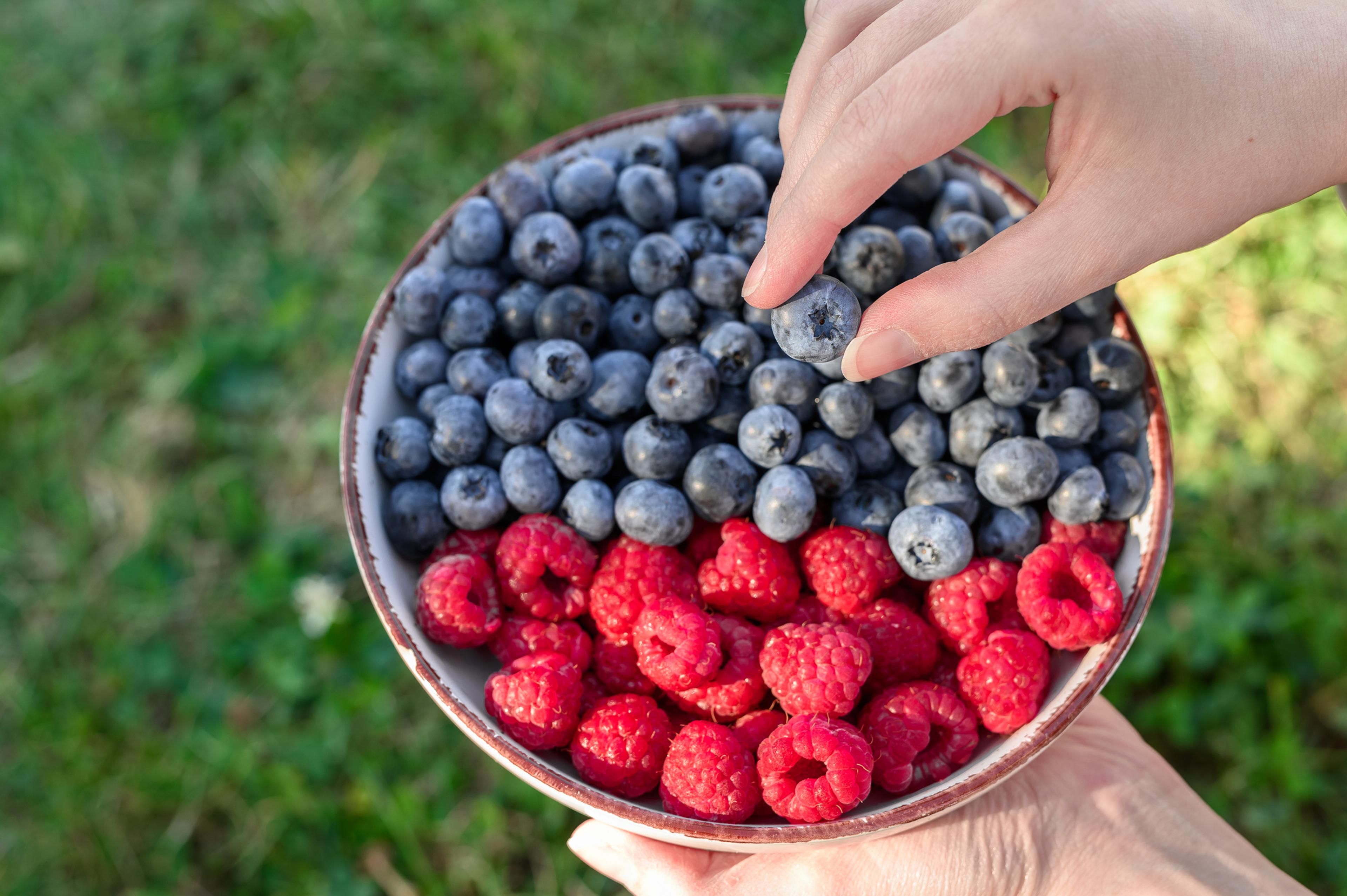
Raspberries have 8 grams of fiber per 1 cup.
Blackberries
Blackberries offer 7.6 grams of fiber per cup.
Avocado
Avocado, which is a stone fruit, has 6.75 grams of fiber per half.
Pear
A medium pear has 5.5 grams of fiber.
Apple
Apples vary in the amount of fiber depending on the type, but many have around 4 grams per apple. A medium-sized Granny Smith has 4.7 grams of fiber.
Cranberries
This berry, sourced from plants that grow in American bogs, have 3.6 grams per cup.
While cranberry sauce is a Thanksgiving staple, dried cranberries make a great addition to a trail mix or on a salad for a pop of flavor.
Blueberries
Blueberries have 3.5 grams per cup.
Pomegranate
This bright red fruit with a sweet-sour flavor has 3.48 grams per half cup of arils, or fleshy seeds. Pomegranate juice is popular, but the edible seeds contain more fiber than the juice of the fruit.
Strawberries
This favorite berry has 2.88 grams of fiber per cup.
Oranges
A naval orange has 2.8 grams of fiber. Like other fruits, eating the orange gets you that fiber compared to orange juice, which has less.
Tips to enjoy high fiber fruits
Berries tend to offer the highest proportion of fiber compared to total calories. Avocado, berries and tart citrus fruits like lemons and limes have the highest fiber to lowest sugar ratio. Fruits higher in fiber tend to have a lower glycemic index, but even high-glycemic index fruits contain less sugar than most desserts.
U.S. Dietary Guidelines recommend five servings of fruits and vegetables daily. Aim to eat fresh or frozen fruits as much as possible, with canned fruits, fruit juice and dried fruits in moderation as they can contain added sugars.
Adding a cup of fruit to your breakfast, lunch or snack is an easy way to increase your fiber intake. Here are a few more sweet and savory ways to enjoy high-fiber fruits:
- Oatmeal with fruit and nuts
- Fruit and greens smoothies
- Mashed or sliced avocado on whole grain bread
- Sliced avocado on tacos
- Pomegranate seeds on a salad
- Cranberries in a homemade trail mix with lightly salted mixed nuts and dark chocolate chunks
- Apples or pears with nut butter
- Baked spiced pears or apples with Greek yogurt
- Healthy apple crisp
- Apple and caramelized onion bites
- Salad with fresh strawberries and strawberry basil vinaigrette
Image: Getty Images
Related: