The Importance of Supporting the Mental Health of Veterans

Jazmin Anderson
| 3 min read
Key Takeaways
- Veterans often face unique mental health challenges when transitioning to civilian life, including a higher risk of post-traumatic stress disorder. About 7% of veterans experience PTSD, often linked to combat deployments, training accidents or military sexual trauma.
- Family members and friends can play an important role in a veteran’s adjustment by encouraging treatment, listening without judgment, being patient and helping with daily responsibilities.
- Multiple mental health resources are available for veterans, including services through the U.S. Department of Veterans Affairs and behavioral health support offered by Blue Cross Blue Shield of Michigan and Blue Care Network for members.
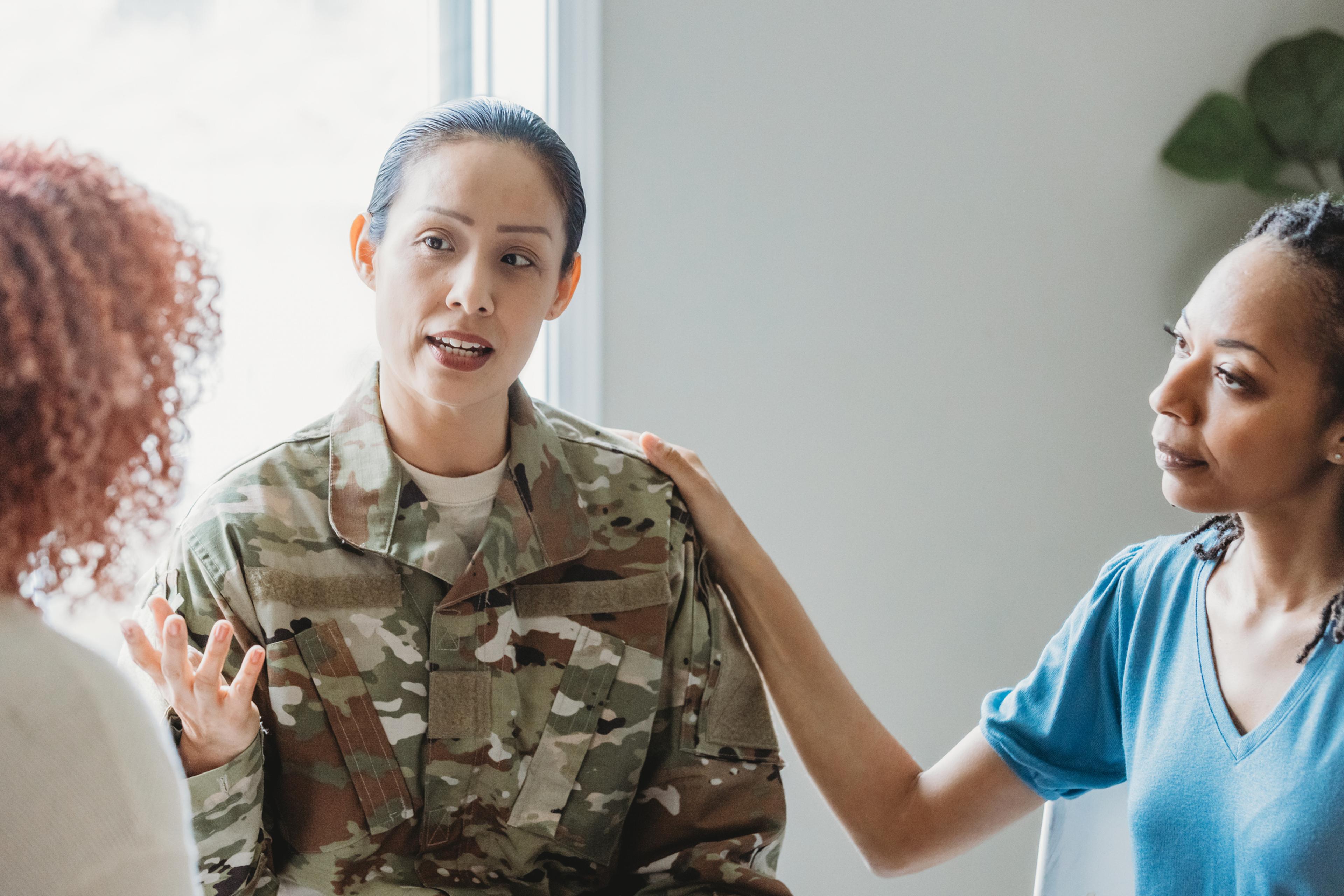
Veterans and their families may deal with unique challenges navigating life after service. Military members experience stressors absent from civilian life during service. It is not rare for former military personnel to encounter feelings of fear, anger, sadness and worry after discharge.
Here are some ways you can support loved ones as they return to everyday life after military service.
The impact of service on veterans
Veterans are more likely to develop Post-Traumatic Stress Disorder (PTSD) than civilians. Seven out of every 100 veterans will have PTSD, according to the U.S. Department of Veterans Affairs. Trauma from war zone deployment, training accidents and military sexual trauma can all have lasting effects on veterans following them into life after service.
Supporting veteran friends and family
Adjusting back to family life after discharge can be difficult. Here are some ways you can support veteran family members and friends, according to the Anxiety and Depression Association of America (ADAA) and the Mayo Clinic:
- Support them in getting treatment: Accompany them to therapy or offer to drive them to appointments.
- Be patient: Give them time and space to settle back into everyday life.
- Don’t pressure them: Avoid forcing them to practice coping methods.
- Don’t judge: People process trauma at different rates. Don’t tell them to get over it, even if you think it’s time for them to. Instead, offer a listening ear.
- Know your capabilities: As a loved one, you can’t make every issue go away, but your presence still matters.
- Help them catch up: Talk openly and gently about decisions and changes made while they were away.
- Offer help with responsibilities: Doing chores and errands for your loved one can be a way to show care for them.
- Take care of yourself: Know when to take a break from tough conversations and follow up later. Give yourself time to relax and recharge.
- Ask for help if needed: If your loved one says or does something leading you to believe they might harm themselves, don’t leave them alone and remove anything from their reach they could use to cause self-harm. Call 911 or a suicide hotline if you think your loved one might be at risk of committing suicide.
Mental health resources for veterans
The U.S. Department of Veterans Affairs offers several in-person and online mental health resources for those struggling to adjust to civilian life.
Blue Cross Blue Shield of Michigan and Blue Care Network can also assist members in finding an in-network mental health professional by calling the behavioral health access lines listed below:
PPO: Behavioral Health Access Line | 1-800-762-2382
This is a free and confidential resource that’s just a call away when you need immediate support. Behavioral health professionals answer 24/7.
HMO: Behavioral Health Access Line | 1-800-482-5982
Crisis services are available across the state. Visit bcbsm.com/crisiscare for more information.
Learn more about mental health and care options you have as a member at bcbsm.com/mentalhealth.
Photo credit: Getty Images