How To Talk About Mental Health With Family
| 1 min read
00:00
00:00
About the Show
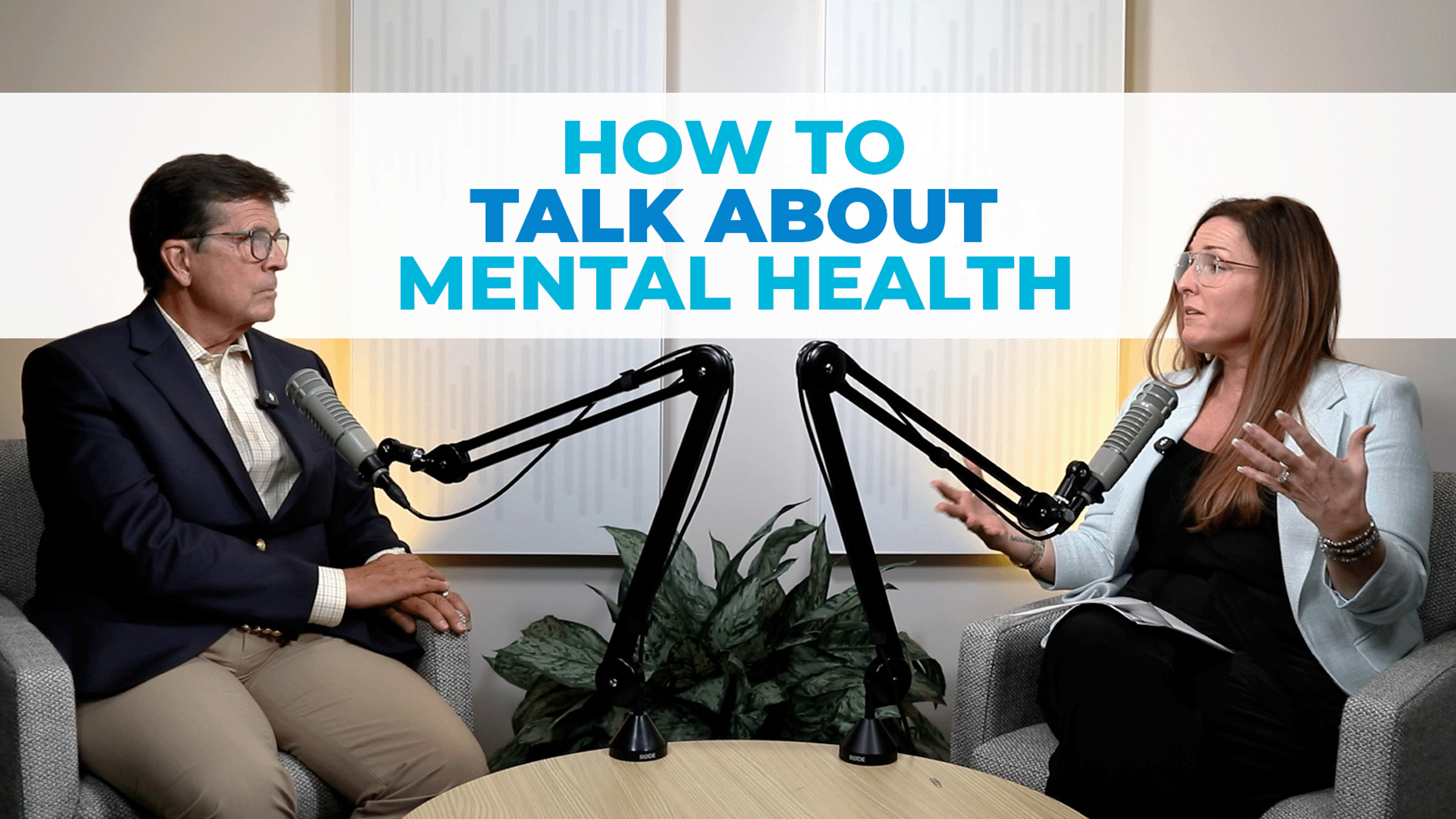
Mental health struggles are not only difficult to deal with, but they can also be challenging to talk about. On this episode, Chuck Gaidica is joined by Dr. Amy Milewski, Vice President of Clinical Partnerships and Associate Chief Medical Officer. Together, they discuss tools to talk to your family about mental health and why it’s so important.
In this episode of A Healthier Michigan Podcast, we explore:
- The stigma around mental health
- How to start talking about mental health
- Why your family's mental health history is important
Transcript
Here is the full transcript of this episode. You can listen to the audio version on streaming platforms or watch on YouTube.
Chuck Gaidica:
Mental health struggles are among the hardest challenges a family can face. One in five adults will experience a mental health condition every year, and nearly one in 20 will experience a serious mental illness. And, something I’ve only recently learned, some mental illness can actually be hereditary.
Mental health struggles are among the hardest challenges a family can face. One in five adults will experience a mental health condition every year, and nearly one in 20 will experience a serious mental illness. And, something I’ve only recently learned, some mental illness can actually be hereditary.
Mental health is essential to living a healthy and happy life. Welcome to A Healthier Michigan Podcast. I’m your host, Chuck Gaidica. Every other week, we dive into topics to help you live your healthiest life, everything from nutrition to mental health, physical health, and even social media trends that impact your wellness.
Today, we’re joined by Dr. Amy Milewski, Vice President of Clinical Partnerships and Associate Chief Medical Officer, to break down mental health, why we need to look past the stigmas and strategies for having healthy conversations, whether about ourselves or with our family members.
It’s good to see you again, Amy. This is a touchy subject. We all have preconceived notions. Sometimes we know something’s going on but don’t want to deal with it, or we’re afraid to talk to someone because they might be in a precarious spot. It’s interesting to dig into this. Can you break down the definitions for us? What do we mean when we say “mental illness”?
Amy Milewski:
Absolutely. It is a difficult topic. When we talk about mental illness, we’re referring to conditions grouped within the medical community in the DSM, the Diagnostic and Statistical Manual of Mental Disorders. That includes things like depression and anxiety, but also personality disorders, autism, and attention deficit disorder. There are a number of conditions that fall under behavioral health diagnoses or mental health conditions.
Absolutely. It is a difficult topic. When we talk about mental illness, we’re referring to conditions grouped within the medical community in the DSM, the Diagnostic and Statistical Manual of Mental Disorders. That includes things like depression and anxiety, but also personality disorders, autism, and attention deficit disorder. There are a number of conditions that fall under behavioral health diagnoses or mental health conditions.
Chuck Gaidica:
We hear a lot about depression and anxiety. Do those fall under the broad umbrella of mental illness, even though for some people it may be a short-term or a lifelong challenge?
We hear a lot about depression and anxiety. Do those fall under the broad umbrella of mental illness, even though for some people it may be a short-term or a lifelong challenge?
Amy Milewski:
Yes, absolutely. It can be confusing because everyone experiences ups and downs. But when those feelings are persistent and begin to impact your life, like causing trouble sleeping, problems concentrating, or issues at work, then it can become a diagnosable condition.
Yes, absolutely. It can be confusing because everyone experiences ups and downs. But when those feelings are persistent and begin to impact your life, like causing trouble sleeping, problems concentrating, or issues at work, then it can become a diagnosable condition.
Chuck Gaidica:
And that really can radiate out into other aspects of your life, affecting your family, your work, your relationships. It’s not just about your mood.
And that really can radiate out into other aspects of your life, affecting your family, your work, your relationships. It’s not just about your mood.
Amy Milewski:
Exactly. When you start to see that level of impact, it’s often time to seek help, whether that’s talk therapy, reaching out to a physician, or sometimes medication.
Exactly. When you start to see that level of impact, it’s often time to seek help, whether that’s talk therapy, reaching out to a physician, or sometimes medication.
Chuck Gaidica:
From your perspective, why is it so important to focus on mental illness?
From your perspective, why is it so important to focus on mental illness?
Amy Milewski:
Mental illness is very common, as you mentioned. One of the challenges is that it often goes untreated, sometimes for as long as 10 years before it’s even diagnosed. That’s very different from physical health, where delays like that are less common. Untreated mental illness can worsen your quality of life and create physical health risks, higher rates of heart disease, diabetes, even obesity. It can make it hard to care for yourself in general, so addressing mental health is crucial.
Mental illness is very common, as you mentioned. One of the challenges is that it often goes untreated, sometimes for as long as 10 years before it’s even diagnosed. That’s very different from physical health, where delays like that are less common. Untreated mental illness can worsen your quality of life and create physical health risks, higher rates of heart disease, diabetes, even obesity. It can make it hard to care for yourself in general, so addressing mental health is crucial.
Chuck Gaidica:
Sometimes it can hit you out of the blue. Life events, a phone call, a sudden loss, can trigger or bring back mental health challenges, even if you’ve been on a long journey with them.
Sometimes it can hit you out of the blue. Life events, a phone call, a sudden loss, can trigger or bring back mental health challenges, even if you’ve been on a long journey with them.
Amy Milewski:
Absolutely. There is a genetic component, but your environment and life experiences are also big factors. Things happening in your life can definitely be triggers.
Absolutely. There is a genetic component, but your environment and life experiences are also big factors. Things happening in your life can definitely be triggers.
Chuck Gaidica:
Why is it that we’re often willing to talk about a cancer diagnosis or a back injury, but we’re hesitant, even afraid, to talk about mental illness?
Why is it that we’re often willing to talk about a cancer diagnosis or a back injury, but we’re hesitant, even afraid, to talk about mental illness?
Amy Milewski:
It’s definitely a delicate topic for many. People worry that talking about it is prying or too personal. Stigma around mental illness has been entrenched in our culture for years, in many families, it was a taboo subject. There are generational and cultural differences, too. The stigma is often reinforced by media and social norms, and there’s still a lingering sense that it’s your fault, or that you should be able to “snap out of it.” But now we know there are real physiological and neurochemical factors at play, and treatment is possible. The stigma is starting to change, especially among younger generations, but we’re still dealing with the legacy of the past.
It’s definitely a delicate topic for many. People worry that talking about it is prying or too personal. Stigma around mental illness has been entrenched in our culture for years, in many families, it was a taboo subject. There are generational and cultural differences, too. The stigma is often reinforced by media and social norms, and there’s still a lingering sense that it’s your fault, or that you should be able to “snap out of it.” But now we know there are real physiological and neurochemical factors at play, and treatment is possible. The stigma is starting to change, especially among younger generations, but we’re still dealing with the legacy of the past.
Chuck Gaidica:
What’s your suggestion for how to start a conversation about mental health? Is it best to be direct?
What’s your suggestion for how to start a conversation about mental health? Is it best to be direct?
Amy Milewski:
There are a couple of approaches. First, just having the conversation is important, getting over that initial hurdle can be the hardest part. Honesty helps, whether you’re seeking help yourself or are concerned about someone else. Being open about your own experiences can set the stage for transparency. And yes, being direct is also helpful, asking, “Are you okay?” or “I’m concerned about you.” If you’re worried someone might be in danger, ask directly if they’ve thought about hurting themselves or others. Studies have shown that asking doesn’t put the idea in someone’s head.
There are a couple of approaches. First, just having the conversation is important, getting over that initial hurdle can be the hardest part. Honesty helps, whether you’re seeking help yourself or are concerned about someone else. Being open about your own experiences can set the stage for transparency. And yes, being direct is also helpful, asking, “Are you okay?” or “I’m concerned about you.” If you’re worried someone might be in danger, ask directly if they’ve thought about hurting themselves or others. Studies have shown that asking doesn’t put the idea in someone’s head.
Chuck Gaidica:
Sometimes we assume we have to talk more than listen, but often someone struggling just wants someone to sit with them, listen, or simply be there, maybe even just sit and cry with them. That can be the most helpful thing.
Sometimes we assume we have to talk more than listen, but often someone struggling just wants someone to sit with them, listen, or simply be there, maybe even just sit and cry with them. That can be the most helpful thing.
Amy Milewski:
You’re absolutely right. Just being a supportive presence, inviting someone out, or walking alongside them can make a huge difference. The biggest risk is feeling isolated or alone. We all go through ups and downs, so bringing empathy and understanding is crucial. If someone isn’t ready to talk, let them know you’re there for them and keep the connection open.
You’re absolutely right. Just being a supportive presence, inviting someone out, or walking alongside them can make a huge difference. The biggest risk is feeling isolated or alone. We all go through ups and downs, so bringing empathy and understanding is crucial. If someone isn’t ready to talk, let them know you’re there for them and keep the connection open.
Chuck Gaidica:
You mentioned loneliness, it’s an epidemic in all age groups these days. Even young people with thousands of “friends” on social media can feel lonely.
You mentioned loneliness, it’s an epidemic in all age groups these days. Even young people with thousands of “friends” on social media can feel lonely.
Amy Milewski:
Absolutely. Studies show that younger generations, who use social media more, actually report higher levels of loneliness. Digital interaction isn’t the same as real connection.
Absolutely. Studies show that younger generations, who use social media more, actually report higher levels of loneliness. Digital interaction isn’t the same as real connection.
Chuck Gaidica:
Let’s circle back to heredity. How does mental illness get passed down in families?
Let’s circle back to heredity. How does mental illness get passed down in families?
Amy Milewski:
Recent research shows there is a genetic component, but it’s not as simple as a single gene. It’s more like a predisposition, similar to heart disease or diabetes. Just because you have a family history doesn’t mean you’ll develop the same condition. This is called epigenetics, your environment and life experiences can affect whether those genes are “turned on” or “off.”
Recent research shows there is a genetic component, but it’s not as simple as a single gene. It’s more like a predisposition, similar to heart disease or diabetes. Just because you have a family history doesn’t mean you’ll develop the same condition. This is called epigenetics, your environment and life experiences can affect whether those genes are “turned on” or “off.”
Chuck Gaidica:
From what I’ve read about epigenetics, it’s like little light switches. Lifestyle choices, like exercise or stress management, can help “turn off” certain risks.
From what I’ve read about epigenetics, it’s like little light switches. Lifestyle choices, like exercise or stress management, can help “turn off” certain risks.
Amy Milewski:
Exactly. Understanding your family history is important, but so is knowing the steps you can take to manage your own risk.
Exactly. Understanding your family history is important, but so is knowing the steps you can take to manage your own risk.
Chuck Gaidica:
What should we watch for or discuss with family members around this?
What should we watch for or discuss with family members around this?
Amy Milewski:
Having conversations about family history can be challenging, there may be guilt, shame, or pain attached. It’s important to choose the right time and place, create a safe environment, and recognize that not everyone may be ready to talk. But starting that dialogue is important for understanding risk and supporting each other.
Having conversations about family history can be challenging, there may be guilt, shame, or pain attached. It’s important to choose the right time and place, create a safe environment, and recognize that not everyone may be ready to talk. But starting that dialogue is important for understanding risk and supporting each other.
Chuck Gaidica:
I have a primary care appointment coming up, and I noticed the pre-visit questionnaire asks about mental health, heredity, food insecurity, and loneliness. It’s encouraging to see those questions included, so doctors can create a more complete picture of a patient’s health and needs.
I have a primary care appointment coming up, and I noticed the pre-visit questionnaire asks about mental health, heredity, food insecurity, and loneliness. It’s encouraging to see those questions included, so doctors can create a more complete picture of a patient’s health and needs.
Amy Milewski:
Those questions are really important. Social factors like food insecurity or loneliness impact both physical and mental health. It’s a big change in medicine, we’re learning that what used to be called “non-compliance” might actually be someone having to choose between medication and food. If we don’t ask, we can’t help, so opening those conversations is key.
Those questions are really important. Social factors like food insecurity or loneliness impact both physical and mental health. It’s a big change in medicine, we’re learning that what used to be called “non-compliance” might actually be someone having to choose between medication and food. If we don’t ask, we can’t help, so opening those conversations is key.
Chuck Gaidica:
This can be a long road, and we need patience and grace for ourselves. How do you advise people about their family support system? I think of the airplane analogy: put your own oxygen mask on first so you can help others.
This can be a long road, and we need patience and grace for ourselves. How do you advise people about their family support system? I think of the airplane analogy: put your own oxygen mask on first so you can help others.
Amy Milewski:
Absolutely. You can’t control your genetics, but you can control your environment and lifestyle, putting on your own oxygen mask first. Things like exercise, a healthy diet, and enough sleep help balance brain chemistry and improve your well-being. Taking care of yourself enables you to care for others.
Absolutely. You can’t control your genetics, but you can control your environment and lifestyle, putting on your own oxygen mask first. Things like exercise, a healthy diet, and enough sleep help balance brain chemistry and improve your well-being. Taking care of yourself enables you to care for others.
Chuck Gaidica:
As we wrap up, what are your final thoughts on how we can help ourselves and others when it comes to mental health?
As we wrap up, what are your final thoughts on how we can help ourselves and others when it comes to mental health?
Amy Milewski:
Mental health is health. That message is finally coming through loud and clear. We all need to take ownership in reducing stigma, starting at home, talking openly with kids, parents, and loved ones to make mental health discussions normal. That will make our society stronger and healthier.
Mental health is health. That message is finally coming through loud and clear. We all need to take ownership in reducing stigma, starting at home, talking openly with kids, parents, and loved ones to make mental health discussions normal. That will make our society stronger and healthier.
Chuck Gaidica:
Great advice. Amy, thanks so much for joining us today.
Great advice. Amy, thanks so much for joining us today.
Amy Milewski:
Thank you, Chuck.
Thank you, Chuck.
Chuck Gaidica:
And thank you for listening to A Healthier Michigan Podcast. Please give us a rating, share the podcast, leave a comment, and let us know what topics you’d like us to discuss next time. Subscribe and favorite us wherever you listen. We hope we provided a tip or two today to help you stay healthy, happy, and well. Until next time, I’m Chuck Gaidica.
And thank you for listening to A Healthier Michigan Podcast. Please give us a rating, share the podcast, leave a comment, and let us know what topics you’d like us to discuss next time. Subscribe and favorite us wherever you listen. We hope we provided a tip or two today to help you stay healthy, happy, and well. Until next time, I’m Chuck Gaidica.