Do These Health And Wellness Trends Really Work?
| 1 min read
00:00
00:00
About the Show
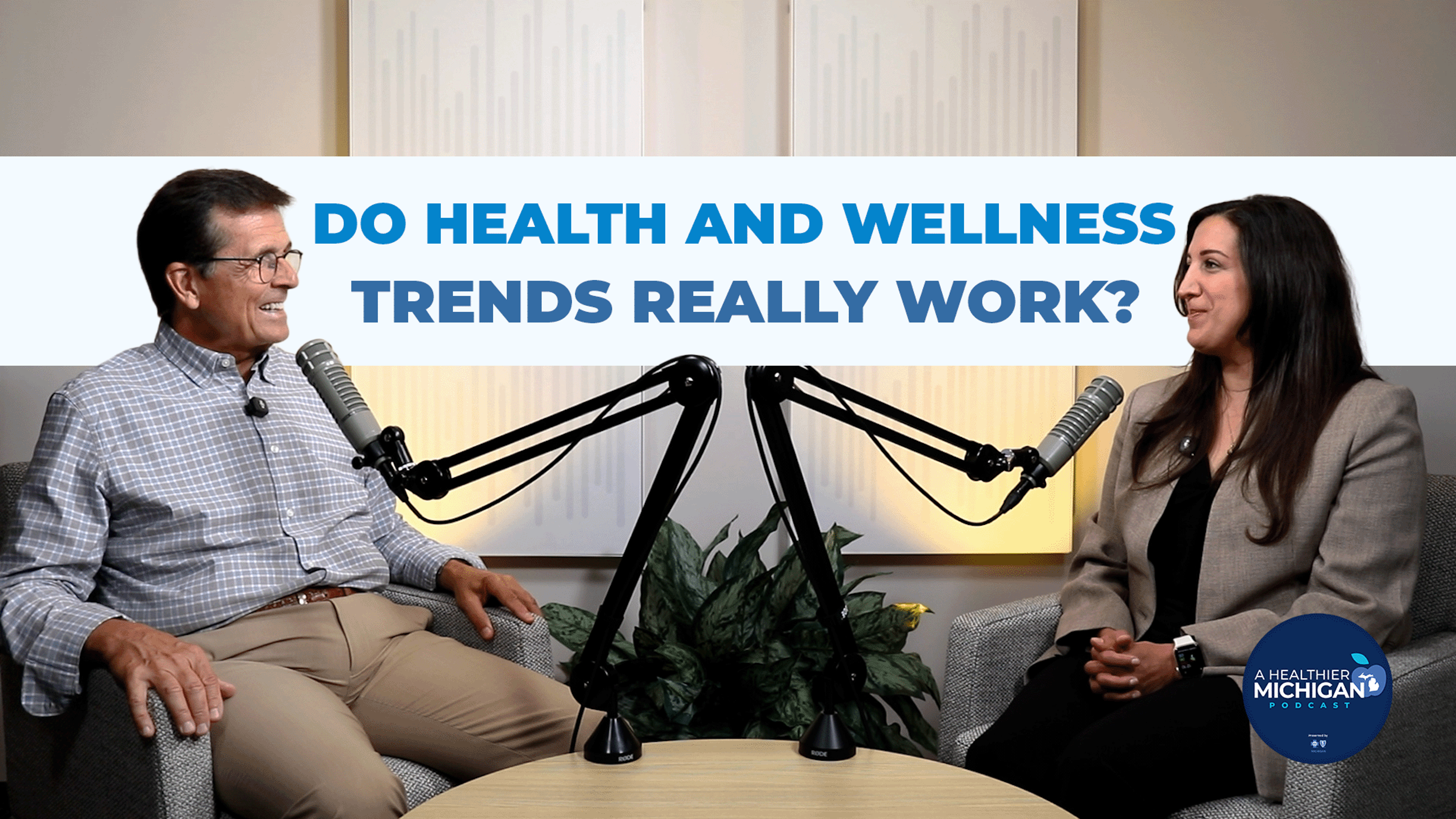
Dry scooping, mouth taping and looksmaxxing. Some health and wellness trends are backed by science, and others, not so much. On this episode, Chuck Gaidica is joined by Care Management Physician, Dr. Angela Seabright, to explain wellness trends, whether you should try them and how to know if their source is trustworthy.
In this episode of A Healthier Michigan Podcast, we explore:
- What to look out for
- Should you try a trend?
- Is it real health advice or marketing?
- Why talking with your doctor matters
Transcript
Here is the full transcript of this episode. You can listen to the audio version on streaming platforms or watch on YouTube.
Why Wellness Trends Go Viral on Social Media
Chuck Gaidica: It seems like there’s always a new health or wellness trend taking over social media. One week it’s a miracle supplement and the next it’s a viral recovery hack or a beauty routine promising life-changing results. Some wellness trends can be helpful or rooted in legitimate science. Others may be overhyped, misleading, or even potentially harmful when taken to extremes. And with so much information online, it can be difficult to tell the difference. Today, we’re taking a closer look at how wellness trends gain popularity, why certain health advice spreads so quickly online, and how all of us can evaluate trends more critically before trying them out on ourselves.
Chuck Gaidica: Welcome to a Healthier Michigan Podcast. I’m your host, Chuck Gaidica, and every other week, we explore topics that help you live your life.
Today, we’re joined by care management physician Dr. Angela Seabright to discuss popular wellness trends, the role social media plays in shaping health conversations, and what all of us should consider before following online health advice. I didn’t think there was a problem with that, doctor.
Dr. Angela Seabright: Oh, really?
Chuck Gaidica: I just thought, you know, if it’s online, it’s got to be true.
Dr. Angela Seabright: Buyer beware.
How to tell if online health advice is credible
Chuck Gaidica: Isn’t this a wild time? It used to be back in the old days where we were told, well, you can’t eat theater popcorn. And then a few years later, you can’t eat eggs. But then on the other side, it was always something that was bad and now was good for you. Now, wellness trends sometimes are good for you and then sometimes become bad for you. It’s really hard to ferret through this information sometimes.
Dr. Angela Seabright:It really is. It’s like going through the weeds. Wellness is a hot topic. More than ever people are turning to social media for information and health information is no exception. So social media, the videos, the reels, the more engaging, the better. The more clicks, the more likes, the more shares, things go viral. And content creators know this. Social media influencers also have a huge role. So what an influencer is doing, what a celebrity is doing, whether that’s a product they're using or a healthy habit or behavior. People are more likely to follow that trend.
Chuck Gaidica: I don’t know how we begin to run the litmus test on these things. You’ll see an ad for something and it says, “See this carrot? It’s not good for you.” And then they go into their pitch about what you should be doing. What do we use to try to find some truth or balance to this? Because the content they’re presenting seems convincing and might make me want to buy their thing or their supplement or whatever is going on. It’s very hard to discern.
Dr. Angela Seabright: Well, the key is you just said “ad.” Right. You will see that it’ll say #ad #sponsorship and so those are advertisements, those are marketing campaigns to get you to buy in. Buying a product or a supplement or you know a program. You know these are all out there and so look for that because it is marketing and it is a business and there’s a product to be sold. So, If you see an ad, it doesn’t necessarily mean it’s wrong. But just keep in mind if you’re watching a video from your favorite influencer and you see that its an ad, that means that that influencer may be making money for that or has a financial incentive to promote that product.
Chuck Gaidica: Have you looked at what makes something go viral in wellness? I’ve often looked at some things that come out and I wonder if it’s the tail wagging the dog. In other words, it’s not a real thing that goes viral because it’s good for us. It’s someone who’s wagging the dog’s tail, not the dog itself, stirring this up for us to pay more attention, to your point about, is it an ad or not?
Dr. Angela Seabright: Well, when it comes to our health, you know a lot of times, they tap into what we fear most, which is we think about our mortality and our health. And so sometimes there’s a fear base to that. They hook you in with a line to make you a little bit scared and then all of the sudden there’s a solution. Often too with health, especially quick fixes or hacks. We’ve talked about those before. Anything that’s going to grab your attention, get people talking. That’s more likely to go viral.
The hidden influence of algorithm and confirmation bias
Chuck Gaidica: It’s interesting too, because in the old days, you’d go to the checkout at the grocery store and it was the tabloid headlines that had those, “Do this in 22 days and you’ll be 40 pounds thinner.” It was just something that was confined generally to that space. Now it’s all over social media and there are tons of quick fixes. Tons.
Dr. Angela Seabright: If you watch a video on a topic, you’ll see more of that. It actually feeds you more of that similar topic. So the next thing that you know, you’re an expert on that single topic because you’ve just watched 20 videos on the same thing. That almost serves as a confirmation bias. So you watch a video on a topic, that confirms whatever belief was in the original video. And sometimes that confirms what your own beliefs are even more.
Chuck Gaidica: And we tend to use that as a part of our behavior in life. If we see enough things about a great car or something, we think, “Well, it must be the top ranking best buy in America.” So we do use these anecdotal evidences to help form opinions.
Dr. Angela Seabright: Right, absolutely. Social media is huge on that.
Chuck Gaidica: So let’s talk a little bit about evaluating health advice. I think it’s so critical in this area of health and wellness. What do you do to run it through a funnel? Is this healthy advice, good advice, and from whom are we getting it?
Dr. Angela Seabright: The first thing I do is check the source, I actually had a very well intentioned person send me a reel recently and I yeah know, it drew me in, it had the music, the fear-based tactics. All the things and I quickly stopped and thought where is this video coming from? So I went back and checked and it was a content creator, but they had no medical background and it was on a health topic. So who is it?
Are they credentialed? Do they have the credibility and information? Are they in the medical field? Are they a physician? Is it a psychologist? Is the information coming from a credible organization? That would be the first thing. Check to see if it’s an ad or sponsored content. If someone is saying, “Click this link,” and it’s an affiliate link, and they get a kickback or sales, be cautious. Look for that as well. Fact-check the claims go to the internet look up the claims and talk with your doctor.
Chuck Gaidica: When I fact-check, I found this interesting: Coming through the pandemic, I would see people trying to become business coaches for your small business. I would Google their name and try to see where they came from. Sometimes they had failed in their life and now they want to be the coach of coaches. If you dig deep enough, you find they’re not a published author, haven’t done this, have no credential. Where did you get your background? Oftentimes, there’s no there there. But they’re creating their own influencer persona, becoming somebody new by recrafting it. And good for them that they’re able to do it. But to your point, it doesn’t take long in today’s world to find a little trace of where someone’s come from.
Dr. Angela Seabright: Right. Anyone can be online, but it doesn’t mean there aren’t experts. There are great experts who go to social media and share information and education. I actually follow a handful of physicians myself who do a great job of explaining complex medical information in a way that’s very understandable. They’re very timely, coming out with content that’s pertinent to what’s going on, and they’re working hard to counter the misinformation that spreads online. So just check the source.
Popular wellness trends that deserve extra attention
Chuck Gaidica: So when you look at the world of social media, everything from TikTok and Instagram to all the standards, are you seeing any particular health and wellness trends or people talking about these things that are giving you pause? Are there topics where you think, “Wait a minute, this is either getting too fast, too far, or it’s just filled with bologna?”
Dr. Angela Seabright: There are so many fads. The biggest one would be supplements. We hear about that all the time.
Chuck Gaidica: Yeah.
Dr. Angela Seabright: We’ve talked about those before. Whenever they’re trying to sell supplements or herbal remedies, they make you feel like you have to take something. The science just doesn’t always support that. So before you sign up for a supplement that you have to take every day or they’re going to send you something in the mail every month, I would really encourage you to talk to your doctor.
I’d also be cautious with any restrictive wellness challenges or fasting, especially if you have medical conditions or take medication, that could be dangerous.
Chuck Gaidica: We just had an episode on fasting. It’s interesting, some of those are very holistic. That’s why it’s called breakfast—break fast, right? We fast all night, we wake up and have breakfast. But, you know, “let’s just drink water for 30 days.” I don’t think so.
Dr. Angela Seabright: Right or prolonged periods of you know? Not eating and what is the goal there are you trying to lose weight? And so, you really should talk to your doctor. You could experience unpleasant symptoms from that. It can make you dizzy or dehydrated and if you take medications that could be a problem as well. If you’re diabetic you know, certainly you don’t want to undertake any kind of wellness challenge without talking to your doctor.
Chuck Gaidica: And isn’t that a thing with supplements, too? The doctor should be aware, especially if it’s a daily thing, that you’re now implementing something new. Something that comes off a tree in the Amazon, and you’re going to take it every day. The doctor should know. Maybe it’s counterintuitive with the meds you’re on or something. It’s not always true that something is safe.
Dr. Angela Seabright: Yeah, it can interact with prescription medication. I think theres a misconception that just because its over the counter or it says all natural on the bottle that its safe and that’s not always true.
Chuck Gaidica: Are you seeing harmless trends that are getting traction? They really are harmless, but could still be a problem if you get into the bad habit?
Dr. Angela Seabright: Yeah I think that the concern is that if someone picks up a trend or a health hack. The concern that I have as a physician is that, Is it something you are doing in conjunction with your medical care or Is it something you’re doing in place of your medical care? For example, if someone all of a sudden saw a video and said “well I don’t want to take a certain medication or my prescription anymore, I saw that it could cause side effects, I’m going to switch and take this all-natural supplement instead”. So, you really don’t want to be replacing standard medical care or advice. You also don’t want to do health hacks or wellness challenges and avoid seeing your doctor if you’re experiencing symptoms. That really warrants a workup in the doctors office because you could be missing something serious.
Protein products, supplements and the wellness business
Chuck Gaidica: There are some things that I think we all are learning that we probably need sometimes more of in our life. Protein, right? But we see these new sodas that have prebiotics. I don’t know if they have postbiotics, but they’re adding them. My wife was out somewhere and came back and said, “Oh, look, pretzels with protein.” I was like, “Okay, it’s protein in everything now, right?” So when you see these things come up, I gather they’re being marketed. There’s no question they are, but are they actually good for your health? We should maybe be having a little more protein, especially as we age. But how do we approach these products that may have a good reason to be in our diets? Should we balance them with natural sources? Eventually, you just go, “Oh, just give me the pretzels.”
Dr. Angela Seabright: If it has a price tag on it, question it. There’s wonderful sources of protein that we can get naturally in our diet. So you can get protein from beans and lentils and tofu and salmon and poultry and Greek yogurt. The problem is if you are focusing on protein solely, you might be displacing healthy aspects of your diet like fruits and vegetables and fiber and complex carbohydrates. So it doesn’t have to be all or nothing. I think protein, we know its important for our body, but we don’t need to have excess amounts of protein especially if its costing money. So just take a look at some of those items that are at the grocery store, they are usually pretty costly and are not always necessary. I would go back to basics and keep it simple. Look at your diet, what can you incorporate naturally that’s beneficial and balanced?
Chuck Gaidica: Balance is a good word. We use it a lot on this podcast. And I think I threw my wife under the bus. I think she walked in with a grandson who’s working on picking things up and putting them down, so he’s protein-centric right now. So I think that’s where they got into the house, just to be fair.
Dr. Angela Seabright: Its really big in the fitness community. There pushing a lot of protein, but they are pushing the protein and you have to buy protein products. So that’s where it becomes a little questionable.
Looksmaxxing, beauty standards and the risks of self-optimization
Chuck Gaidica: We’ve also seen a trend, and now we’ve heard there’s a huge downside to people who are doing this thing called looksmaxxing. This is self-optimization where it’s not just about picking up weights and getting muscular anymore. It’s hitting yourself with a hammer to get your jawline different. We know about things like injectables, people are getting things altered all the time, but this idea of maxing out your looks to the extreme, and they’re getting followers like crazy, thousands, maybe millions. What are you seeing in that area?
Dr. Angela Seabright: The concern there is it’s targeting younger individuals. The trend went viral among young men and the fitness community. This whole concept of maxing out your looks, and the concern is that people may take extreme measures, like you mentioned, to reach an unrealistic beauty or fitness standard. Social media is the land of comparison. What you’re seeing isn’t always real. There are filters. You’re trying to achieve a certain look that might not be sustainable and could be dangerous because you may engage in excessive exercise, restrictive eating, and all of those can be bad for your health.
Why sticking to the basics can be the best wellness advice
Chuck Gaidica: I don’t want this to sound like a negative episode, because we’ve dealt with a lot of cautions. But the upside to wellness is great, right? We’re looking for a longer lifespan, but I also want there to be a health span. I want to be healthy all the way to the end of the ride.
Dr. Angela Seabright: Right. There’s nothing wrong with wanting to be well. We all want to be well. The more we’re proactive and engaged in our own health and learning and advocating for ourselves, the better. Have an open mind. Just don’t do anything extreme and always talk with your doctor.
Chuck Gaidica: Really good advice. As we look into this topic, last comments here about encouraging listeners to keep in mind when they’re trying a new wellness trend, what should we be checking? What should we be thinking about?
Dr. Angela Seabright: Yeah, so, fads fade. So, I would really stick with the basics. We’ve talked about your diet, your exercise, your sleep, social connections, all of those will go much further for your health, especially if you’re consistent in any area. It’s not about trying a supplement for a month and stopping or trying a new workout for a month and stopping. It’s about consistent, healthy habits.
Chuck Gaidica: Well, next time I see you, I don’t know when that will be, doctor,but you’ll say, “That guy’s eating protein pretzels.”
Dr. Angela Seabright: I’ll have to give them a try.
Chuck Gaidica: Good to see you, Dr. Angela Seabright with us today. These health and wellness trends we’ve been talking about are going to continue to evolve. We’re all going to be exposed to them, especially in a world shaped by social media and constant information sharing. The key is learning how to approach these trends thoughtfully. Like the doctor suggests, we need to ask questions and check things out. Focus on habits that support long-term well-being rather than quick fixes. Thanks for being here today on the Healthier Michigan Podcast, brought to you by Blue Cross Blue Shield of Michigan. If you like our show and want to know more, check out ahealthiermichigan.org/podcast. You can leave us a rating, share the podcast, or leave a comment. Take it with you when you’re jogging. Let us know what you think and what we should discuss next time. Subscribe or favorite us wherever you listen, and check us out on YouTube. We hope we’ve equipped you with a tip or two today to make healthier choices in your everyday life. Until next time, I’m Chuck Gaidica. Be well.