How to Make Vegetable Stock

Jazmin Anderson
| 3 min read
Key Takeaways
- Use carrots, onions, celery, parsley and other vegetables or clean scraps; avoid starchy or bitter veggies such as potatoes, squash or broccoli.
- Simmer raw vegetables in cold water with salt and peppercorns for about an hour without stirring, then cool quickly and refrigerate at 41 °F or below.
- Store the stock for 4 to 5 days in the fridge or two to three months in the freezer, using freezer‑safe containers and leaving headroom for expansion.
Vegetable stock is a kitchen staple you can add to a wide range of dishes, like soups and sauces, to enhance their flavor. While store-bought stock works just fine in your recipes, making your own lets you customize its flavor and use leftover produce before it goes bad.
Here are some guidelines for making your own vegetable stock.
What can you put in your vegetable stock?
Carrots, onions, celery and parsley are common ingredients in vegetable stock. But you can also add other vegetables and herbs you find in your kitchen, such as:
- Mushrooms
- Scallions
- Leeks
- Fennel
- Garlic
- Bay leaves
- Thyme
- Black peppercorns
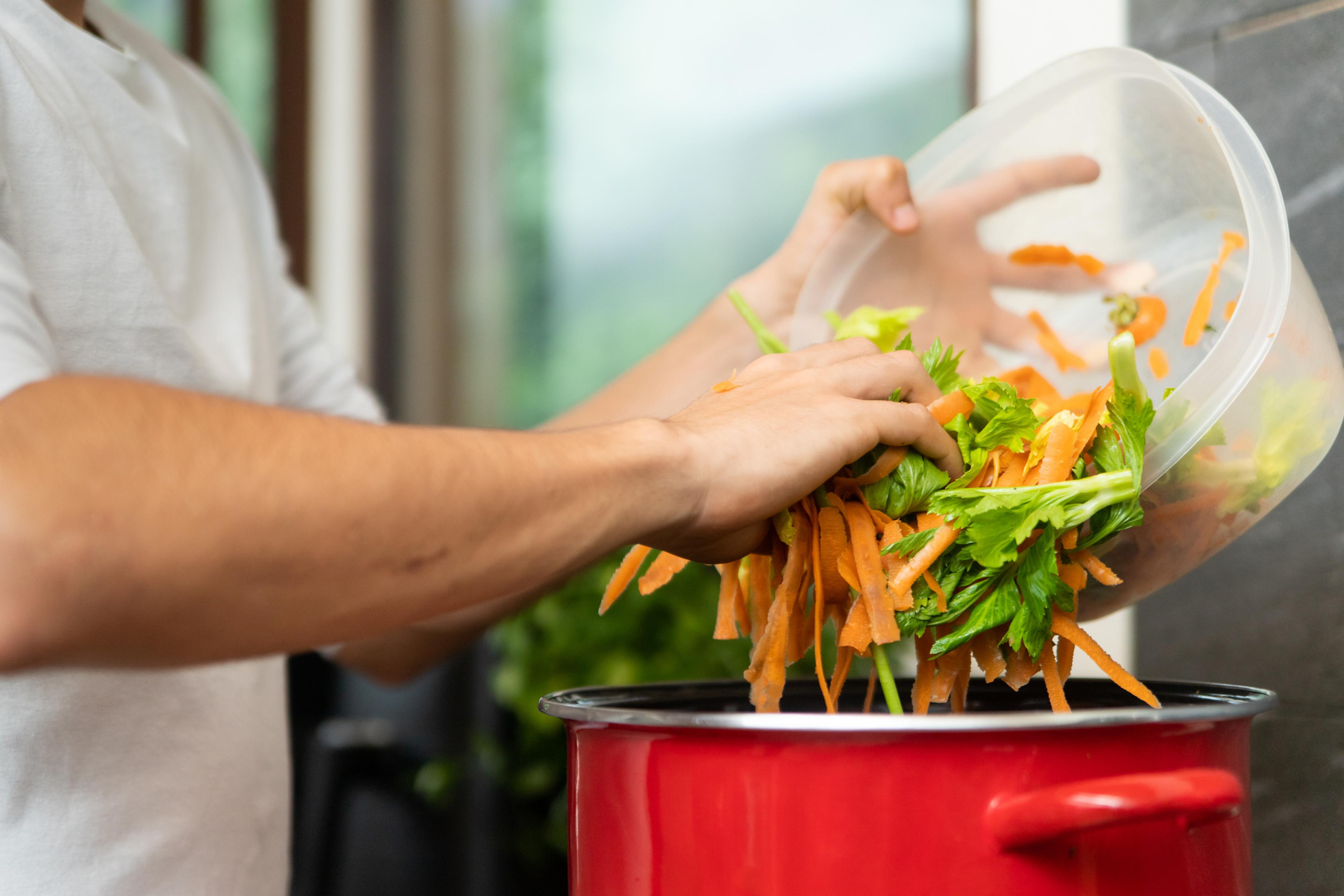
You can also use clean vegetable scraps to make stock. Using parts like onion peel will further enhance the flavor.
Avoid using starchy vegetables, such as potatoes, as they will turn the stock cloudy. Squashes and cruciferous vegetables like broccoli can make the stock bitter.
How to prepare vegetable stock
You could pre-cook the vegetables in olive oil until they turn slightly brown, which reduces the time the broth needs to boil. However, using this method might impact the clarity and color of your stock.
For this reason, most recipes recommend starting with raw vegetables.
First, wash your vegetables, then chop them up to fit in the pot you’ll use. Put all your ingredients in a pot and add enough cold water to cover them. Add some salt and black peppercorns to the broth before bringing it to a boil to enhance the flavor. Bring your pot to a boil over high heat, then reduce the heat to low and simmer for an hour. Avoid stirring as it can create cloudiness.
After an hour, taste your stock. If you find the flavor too strong, you can pour extra water over it. If the stock tastes bland, you can add some extra salt and simmer for just a little longer.
Once you’re satisfied with the taste, strain your broth into a bowl, pressing the juices out of the vegetables. After straining, cool the stock promptly before refrigerating. To promote food safety, divide large batches into smaller containers or place the container in an ice-water bath to cool quickly and refrigerate once cooled. Stock should be kept refrigerated at 41°F or below.
How to store vegetable stock
Vegetable broth can be stored in the fridge for 4 to 5 days and in the freezer for 2 to 3 months, per the recommendations of the U.S. Food and Drug Administration.
If you plan to freeze the stock, use freezer-safe containers or freezer bags. Leave some space at the top of the container to allow for expansion as the stock freezes. For convenient portioning, stock can be frozen in food-grade silicone freezer trays and then transferred to freezer-safe bags or containers once frozen.
Photo credit: Getty Images