When Michigan Gets Sweet: A Guide to Maple Syrup Season and Festivals This March

Jake Newby
| 4 min read
Key Takeaways
- Maple syrup season is the annual period around this time of year when sap flows from maple trees and can be collected before being boiled into syrup.
- March breeds the best environment for maple syrup season in Michigan because of the natural freeze-thaw cycle that occurs between the late winter and early spring.
- It typically spans four to six weeks, from late February to early April. Southern lower Michigan often starts tapping first. Producers in the Upper Peninsula may have to wait a couple of weeks longer.
- Sugar maples are prized for syrup production because they yield the highest sugar content of all maples. Other maples can also be tapped, though the sugar level tends to be lower.
It might still feel like winter in much of Michigan, but by early March something quietly delicious begins happening in the woods and sugarbushes across the state.
Our neighbors to the north aren’t the only maple syrup aficionados; Michigan ranks as the fifth leading state in the United States in maple syrup production, per Hey Michigan. March breeds the best environment for maple syrup season – also known as maple sugaring season – in Michigan because of the natural freeze-thaw cycle that occurs between the late winter and early spring.
Let’s celebrate the season by learning how maple syrup is made and shouting out the biggest maple syrup festivals in Michigan over the next six weeks.
What and when is maple syrup season?
Maple syrup season is the annual period around this time of year when sap flows from maple trees and can be collected before being boiled into syrup.
In Michigan, the season is driven entirely by temperature: when nights dip below freezing and days climb above that, sap begins to move within the tree. That fluctuation of cold and warmth creates pressure differences inside the tree that push sap out once a hole is tapped. When sap stops flowing consistently – or when buds begin to open and the sap turns cloudy and bitter – that signals the end of the season.
Since it is weather-dependent, there is no fixed calendar date for maple syrup season in Michigan. But for most of the state, March is the heart of syrup-making season. It typically spans four to six weeks, from late February to early April. Southern lower Michigan often starts tapping first. Producers in the Upper Peninsula may have to wait a couple of weeks longer.
From tree to table: how to tap for sap
For many maple lovers, learning to tap a tree and boil sap is as much a part of spring as ice cream shops opening and birds migrating through the Great Lakes region. Ever wondered what goes into the sweet spring ritual of producing maple syrup? Here’s a quick explainer.
- Choose the right trees: Sugar maples are prized for syrup production because they yield the highest sugar content of all maples. Other maples — black, red and silver — can also be tapped, though the sugar level tends to be lower.
- Make sure trees are ready: Only mature trees of about 10 inches in diameter or more should be tapped. A hole about 1.5-3 inches deep should be drilled at a slight downward angle into the trunk.
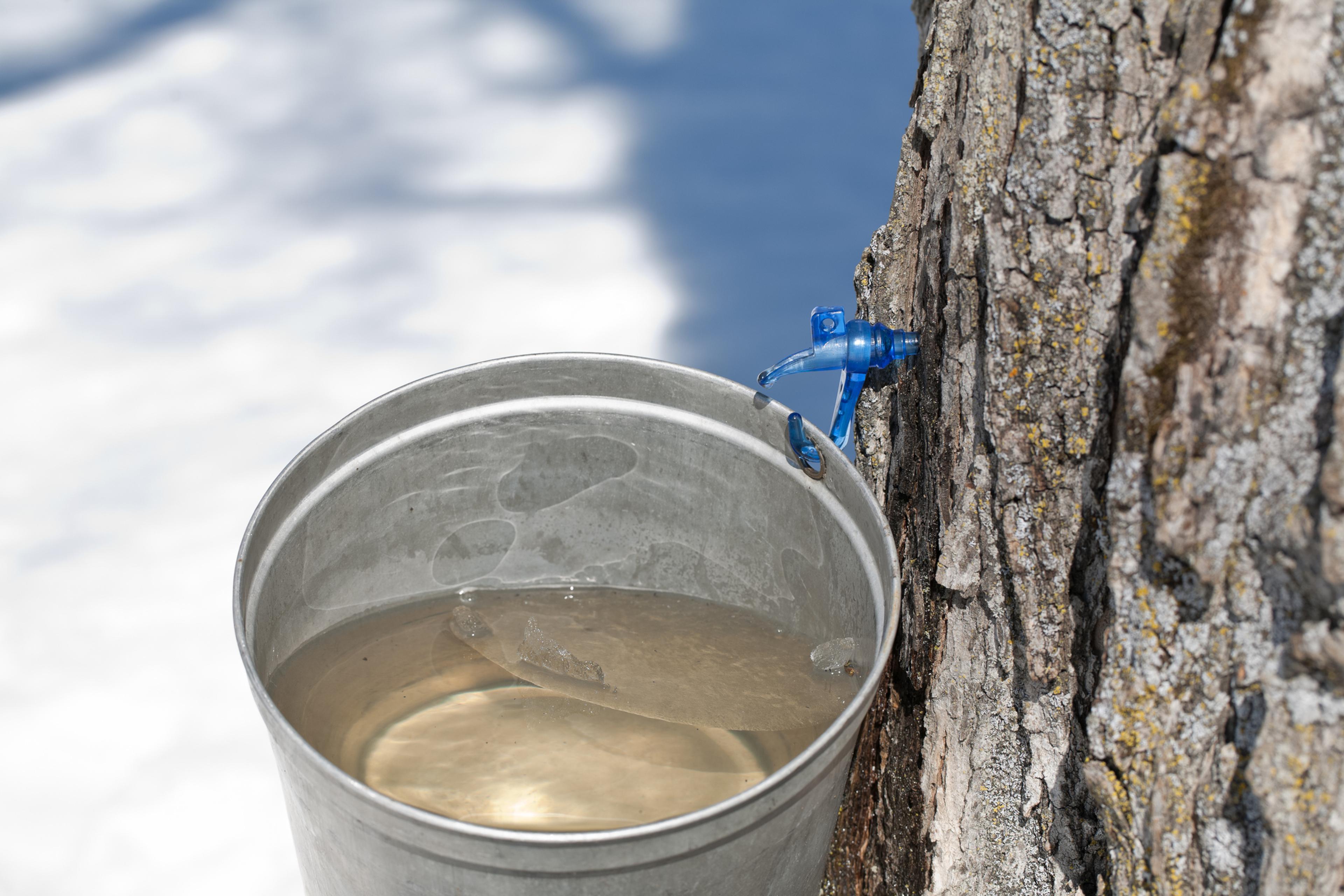
- Insert a spout (spile): Once the spout is set, a bucket or bag hangs from it to catch sap as it drips out. Companies running commercial operations use tubing systems instead of buckets.
- Collect, filter and boil: First, filter the sap to clean any debris. Sap is about 98% water, so it needs to be boiled down significantly. It takes roughly 40 gallons of sap to make one gallon of syrup.
- Finish as buds open: When trees start budding, the sap’s flavor changes and producers pull taps for the year.
Maple syrup festivals in March
March is the time to tap, but it’s also a time to celebrate the season! Events across the state feature syrup tastings, tapping demonstrations, pancake and waffle breakfasts and more. Here’s a look at some of the biggest events taking place in March:
Maple Sugar Festival: 9 a.m. until 4 p.m. Saturday, March 7.
Hosted at the Kalamazoo Nature Center, the 61st annual Maple Sugar Festival celebrates more than six decades of maple sugaring traditions. Visitors can enjoy pancakes, demonstrations, historical insights, adaptive tours, family-friendly activities and much more.
Hosted at the Kalamazoo Nature Center, the 61st annual Maple Sugar Festival celebrates more than six decades of maple sugaring traditions. Visitors can enjoy pancakes, demonstrations, historical insights, adaptive tours, family-friendly activities and much more.
Maple Sugaring Days: March 7 and 8.
At Port Oneida Farms Heritage Center near Sleeping Bear Dunes, this free event blends historical and modern syrup-making. Walk through heritage demonstrations, watch sap boiling and even make maple taffy on the snow. Events take place at both Dechow Farm and Olsen Farm in Maple City.
At Port Oneida Farms Heritage Center near Sleeping Bear Dunes, this free event blends historical and modern syrup-making. Walk through heritage demonstrations, watch sap boiling and even make maple taffy on the snow. Events take place at both Dechow Farm and Olsen Farm in Maple City.
Maplefest: March 7 and 8.
At Michigan State University’s Tollgate Farm in Novi, this two-day festival offers a hands-on look at how sap is tapped and turned into syrup. Enjoy wagon rides, sugar shack tours, pancake celebrations and interactive farm activities for all ages.
At Michigan State University’s Tollgate Farm in Novi, this two-day festival offers a hands-on look at how sap is tapped and turned into syrup. Enjoy wagon rides, sugar shack tours, pancake celebrations and interactive farm activities for all ages.
Maple Sugaring Fest at Palmer Park: 11 a.m. until 2:30 p.m. March 14.
In Detroit’s Palmer Park, this family-friendly gathering teaches visitors how maple syrup is made from tree to pancake — including a chance to tap trees and see sap boiling close up.
In Detroit’s Palmer Park, this family-friendly gathering teaches visitors how maple syrup is made from tree to pancake — including a chance to tap trees and see sap boiling close up.
Maple Row Sugarhouse Festival: March 21–22 and March 28–29.
In Jones, this festival showcases Michiganders’ maple traditions with sugarhouse tours, food, activities and plenty of syrup for tasting and purchase. Guests can learn more about their maple syrup journey, which started in 2011 with just four trees and five gallons of pure maple syrup.
In Jones, this festival showcases Michiganders’ maple traditions with sugarhouse tours, food, activities and plenty of syrup for tasting and purchase. Guests can learn more about their maple syrup journey, which started in 2011 with just four trees and five gallons of pure maple syrup.
Shepherd Maple Syrup Festival: April 23-26.
This four-day event in Shepherd includes everything from pony rides for kids and sugar bush tours to tractor pulls and a full-scale carnival. With approximately 1,200 maple trees tapped in the village of Shepherd, come find out why this is one of the biggest maple syrup festivals of them all.
Photo credit: Getty Images
Read more: